Future Faking: The Manipulative Psychology of Empty Promises
By Mila Brooks
Behavioral Psychology & Relationship Expert
When a new match talks about marriage and vacations on the second date, it feels like a fairy tale. Psychologically, it's a massive red flag. Learn how to spot the illusion.
The rush of dopamine that accompanies these visions of a shared life is powerful. Finally, you think, a man who isn’t afraid of commitment. However, in the world of toxic relationship dynamics and personality disorders, this behavior is a recognized manipulation tactic known as "Future Faking." It is the art of selling a dream to bypass the natural, often slow, progression of a healthy relationship.
The Mechanics of the Illusion
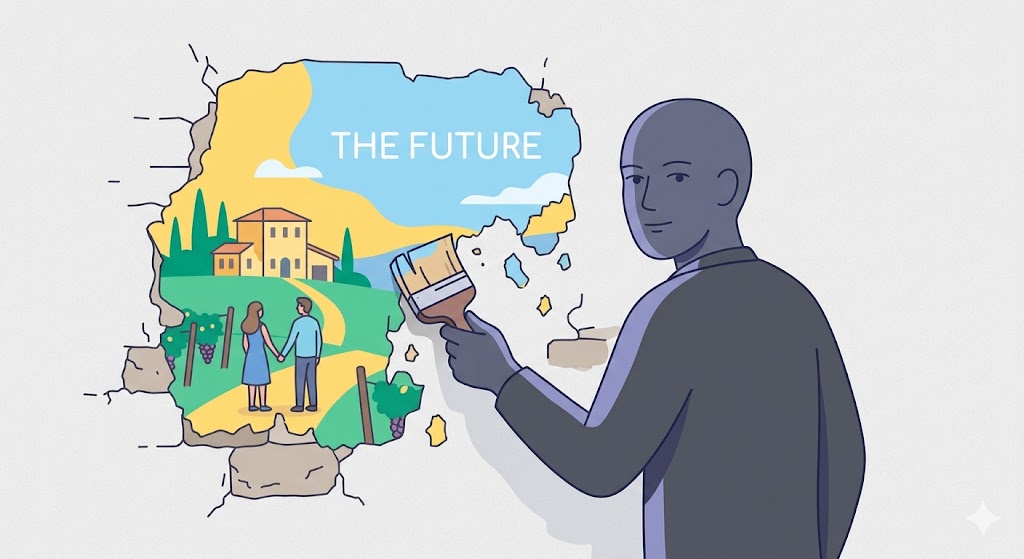
Future faking occurs when an individual paints a detailed, highly romanticized picture of a shared future to manufacture a rapid, unearned sense of intimacy. While it can be done by anyone with avoidant tendencies, it is a hallmark of Narcissistic Personality Disorder (NPD) and antisocial behaviors.
The goal is simple: to secure your emotional investment, fast-track trust, and accelerate physical or financial intimacy without performing the actual labor required to build a foundation. By the time you realize the "future" isn't coming, you are already deeply bonded to the "faker."
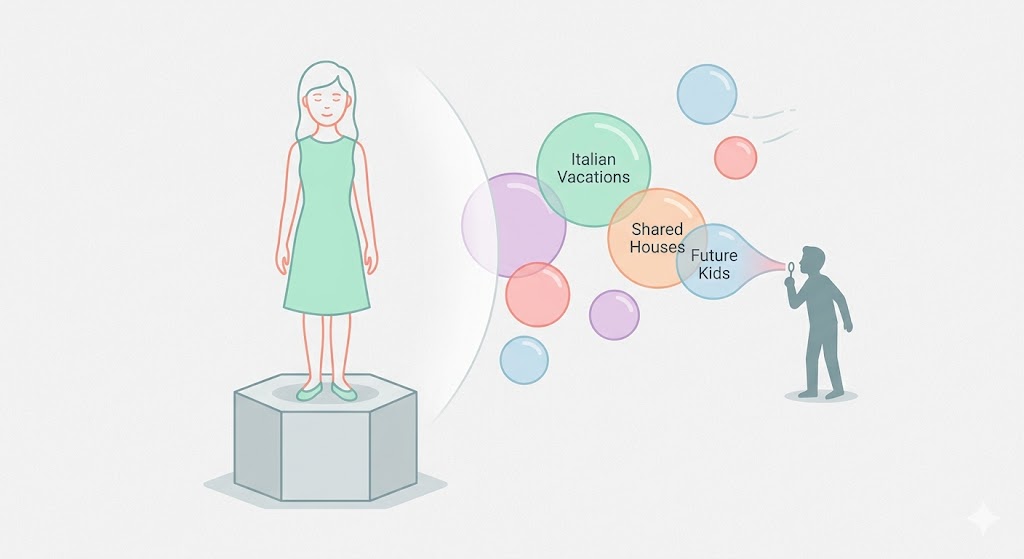
Future faking targets your specific "lack." If you’ve been lonely or desire a family, the faker mirrors that exact desire back to you. It acts as an emotional narcotic, temporarily bypassing the logical prefrontal cortex of the brain.
The Inevitable Discard
The defining characteristic of this cycle is the "bait and switch." When the time finally arrives to fulfill a promise—be it booking that flight or meeting the parents—the dynamic shifts. The future faker may suddenly create a crisis, pick an irrational fight, or "devalue" you to justify why the promise can no longer be kept.

In many cases, the individual was never "lying" in the traditional sense; they were addicted to the high of the fantasy itself. However, they are fundamentally incapable of the reality of consistent, daily commitment. Once the novelty wears off and the work begins, they ghost or discard the partner for a new "audience."
Differentiating the Visionary from the Faker
Healthy excitement looks like planning a third date. Toxic future faking looks like planning a third anniversary. To protect your heart, look for these two psychological markers:
1. Proportionality
Does the level of commitment match the level of knowledge? A healthy partner wants to understand your character, your values, and your flaws before discussing cohabitation. If the "planning" outpaces the "knowing," it is a red flag.
2. Action vs. Fantasy
A future faker promises a villa in Tuscany but forgets to text you back for three days. A secure partner makes short-term, concrete plans (dinner this Friday at 7 PM) and follows through consistently.
Tired of the Toxic Cycle?
Put this psychology into practice. Match with verified, intentional users on our secure Telegram platform and escape the swipe fatigue.