Gut Instinct or Trauma Trigger? How to Tell the Difference
By Nina Patel
Behavioral Psychology & Relationship Expert
When your heart is racing and you feel the urge to run, is it your female intuition warning you of danger, or just your past trauma self-sabotaging a good thing?

Decoding Somatic Signatures
To differentiate between intuition and trauma, we must look at "somatic markers"—the specific physical patterns of the nervous system. While both feel "real," their biological textures are vastly different.
Trauma: Loud and Frantic
A trauma trigger is chaotic. It feels like a "hijacking" of the brain. Your heart races, your breath becomes shallow, and your mind spins into catastrophic "what-if" scenarios. It is often rooted in a desperate need for immediate escape or defense.
Intuition: Quiet and Cold
True intuition is a "knowing." It lacks the frantic emotional charge of trauma. It manifests as a calm clarity—a dropping sensation in the stomach or a neutral observation that something is simply "off." It doesn't scream; it states facts.
Key Insight: The Narrative Test
Check the language in your head. Trauma uses emotional, judgmental language: "He’s going to abandon me like my father did." Intuition uses neutral, present-tense language: "He just contradicted his own story. I feel unsafe."
The 24-Hour Pause Protocol
Because a trauma response mimics the urgency of a life-threatening emergency, it demands immediate action. Intuition, however, can wait. High-quality relational decisions should never be made while the nervous system is actively dysregulated.
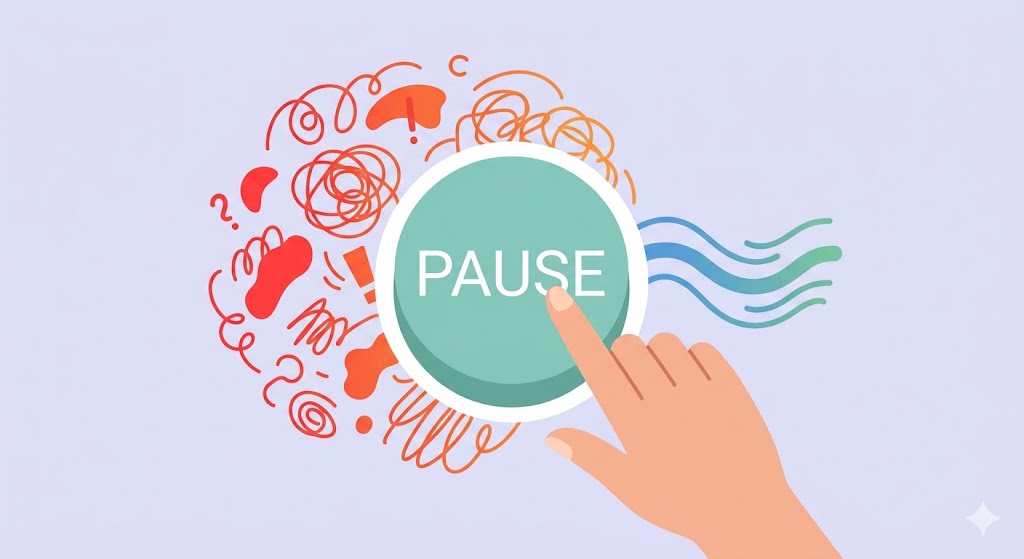
If you feel the urge to "ghost," pick a fight, or run, implement a 24-hour moratorium on action. Remove yourself from the environment and engage in grounding exercises—deep breathing, somatic shaking, or a brisk walk. Once the cortisol has cleared your system and your heart rate returns to its baseline, you can evaluate the "data" with logic.
Identifying the Root Evidence
To finalize your assessment, look for the "Root Evidence." Ask yourself: What specific, observable behavior in the present moment triggered this feeling?
| Trigger Event | Likely Source |
|---|---|
| He asks for a commitment or meeting family. | Avoidant Trauma / Fear of Engulfment |
| He is rude to service staff or dismissive. | Intuition / Character Assessment |
| He doesn't text back for three hours. | Anxious Trauma / Fear of Abandonment |
| He subtly gaslights or changes facts of a story. | Intuition / Red Flag Detection |
By separating the somatic "noise" from the intuitive "signal," you stop being a victim of your past and start becoming an architect of your future. Trust the data, regulate the body, and move toward healthy intimacy with clarity.
Tired of the Toxic Cycle?
Put this psychology into practice. Match with verified, intentional users on our secure Telegram platform and escape the swipe fatigue.