The Compartmentalization Cop-Out: Why He Acts Like a Boyfriend but Refuses the Title
By Noah Ellis
Behavioral Psychology & Relationship Expert
He takes you on romantic dates, pays for dinner, and cuddles you, but panics when you ask 'what are we?'. Uncover the male psychology of compartmentalization.
You know the script. He treats you like royalty, planning meticulous dates, introducing you to his inner circle, and offering emotional support that rivals a therapist. By every behavioral metric, he is your boyfriend. But the second you seek clarity, he invokes the "No Label" clause: "I really care about you, but I’m just not in a place for a title right now." This isn't just a communication breakdown; it is a fundamental psychological divide in how commitment and intimacy are processed.
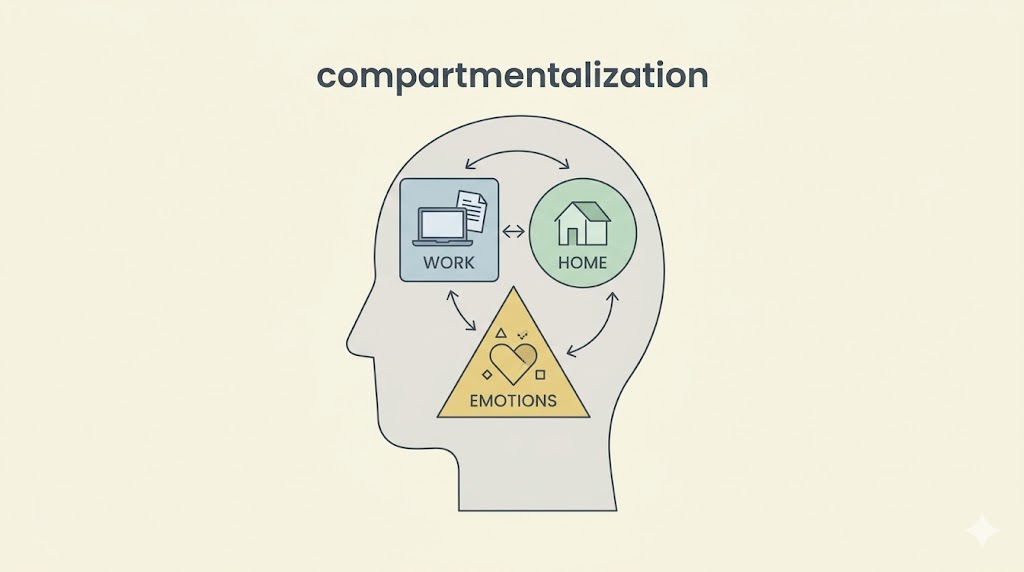
The Architecture of Compartmentalization
The most common mistake women make is assuming that emotional investment naturally leads to a desire for exclusivity. From an evolutionary and psychological standpoint, women often view intimacy and commitment as a single, braided cord. For many men, however, these concepts exist in entirely separate "mental boxes." This is the core of psychological compartmentalization.
He isn't necessarily lying when he says he cares. He can genuinely feel affection, desire, and closeness in the "Now Box," while simultaneously feeling zero obligation in the "Future/Commitment Box." He isn't faking the relationship; he's just living in a version of it that has no expiration date or binding contract.
When he’s with you, he’s 100% present. He enjoys the "Girlfriend Experience" (GFE) because it provides him with emotional stability and physical intimacy. But because he has compartmentalized these feelings, he doesn't feel the logical "next step" pressure that you do. To him, the current state is the final destination, not a transition phase.
The Accountability Gap
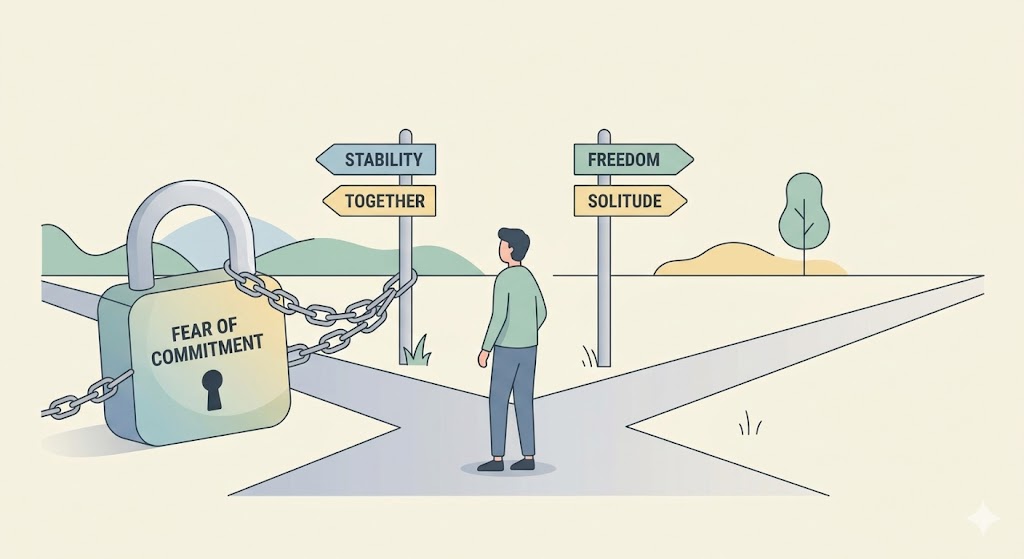
Why the allergy to labels? In the modern dating economy, a label is synonymous with accountability. Without a title, his behavior is technically "unregulated." If he disappears for a weekend or prioritizes a career move over your birthday, he can retreat to the safety of the "we never said we were exclusive" defense.
For men struggling with avoidant attachment or emotional immaturity, a label feels like a loss of agency. They view commitment not as a foundation to build upon, but as a ceiling that limits their potential. This fear of accountability often stems from:
- Loss of Options: Even if he isn't actively looking for someone else, the theoretical possibility must remain open for him to feel "free."
- Emotional Burden: A label means he is now responsible for your emotional well-being. To the commitment-phobe, your sadness becomes his "fault."
- Performance Anxiety: Being a "boyfriend" comes with social and familial expectations he may not feel equipped to meet.
Why Logic Fails to Bridge the Gap
The most common—and most damaging—strategy women employ is the "Logic Pitch." You list the facts: you spend five nights a week together, you've met his mother, and you don't see other people. You try to prove that a label wouldn't change anything because the relationship already exists.
"You cannot negotiate desire, and you certainly cannot logic someone out of a fear they didn't logic themselves into."
— Relationship Dynamics Fact
When you try to convince him, you are inadvertently signaling that your boundaries are negotiable. If you continue to provide the full "Girlfriend Experience" while he refuses the "Boyfriend Responsibility," you are essentially telling him that his behavior has no consequences.
The Power of the Exit
To change the dynamic, you must stop judging him by his capacity for romance and start judging him by his capacity for commitment. Romance is a mood; commitment is a character trait. If he is unwilling to give you the security you require, the only move left is to withdraw the benefits he currently enjoys.
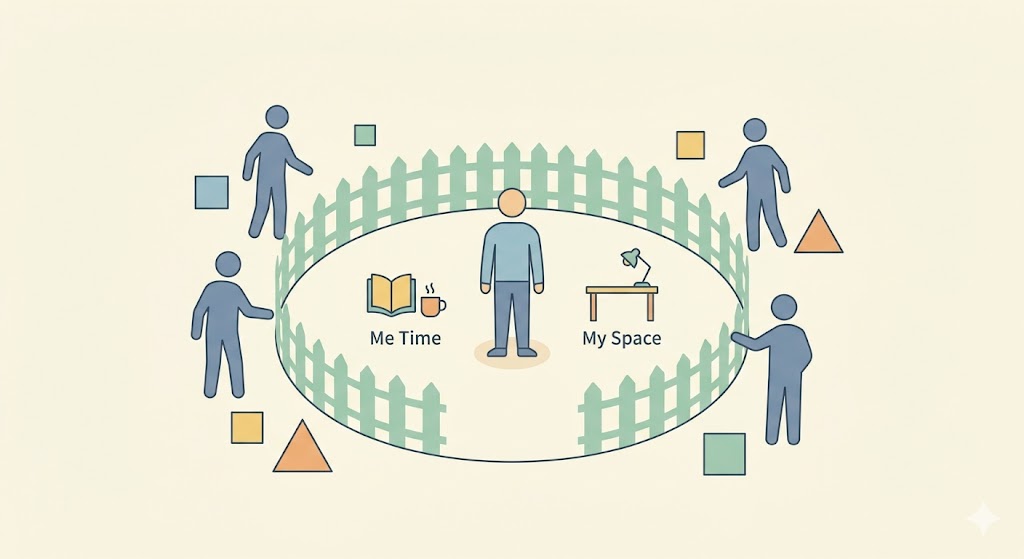
Walking away isn't a "game" or a "tactic"—it is an act of self-preservation. It forces him to face the reality of your absence. Only then will he realize if the companionship he enjoyed is worth the "label" he feared. And if he lets you go? You’ve simply stopped investing in a business that was never going to give you a return on your investment.
Tired of the Toxic Cycle?
Put this psychology into practice. Match with verified, intentional users on our secure Telegram platform and escape the swipe fatigue.