The Illusion of Action: Why Swiping Feels Like Work But Keeps You Single
By Mila Brooks
Behavioral Psychology & Relationship Expert
You spend two hours a day on dating apps, but haven't been on a real date in months. Discover the behavioral psychology of 'Action Faking' and how to start making real-world progress.
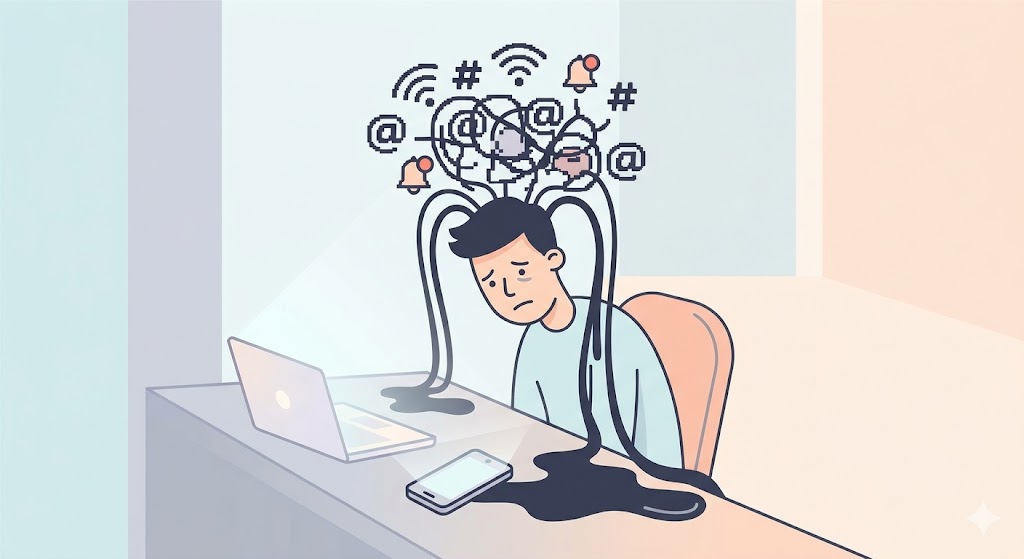
Action-Faking vs. Action-Taking
In behavioral science, Action Faking is the act of performing tasks that feel productive but don't actually move you closer to your ultimate goal. It is the ultimate form of high-functioning procrastination.
"Reading five books on marriage, spending two hours editing a bio, and swiping for 30 minutes before bed."
"Asking a match for coffee, attending a local mixer, or initiating a vulnerable conversation in person."
Swiping is the digital era's most potent "fake" action. Each match triggers a micro-dose of dopamine, tricking your brain into believing you are achieving romantic success. However, because swiping requires zero vulnerability, it provides the illusion of effort without the risk of real-world friction.
Key Insight
"The human brain prefers the certainty of a digital 'like' over the terrifying uncertainty of a physical 'hello.' Action faking is simply a defense mechanism against the possibility of being truly seen."
The Comfort Zone Trap
We rely on these digital rituals because true intimacy is inherently high-stakes. A physical date introduces the possibility of physical judgment, social awkwardness, and the eventual potential for heartbreak.
The smartphone acts as a "sterile buffer." It allows you to cosplay as a person seeking love while subconsciously ensuring your lifestyle remains undisturbed. You aren't dating; you are collecting data points to validate your desirability without ever having to test it in the wild.

Moving the Needle: The "Three-Message Rule"
To break the cycle of action-faking, you must bridge the digital-to-physical gap with surgical precision. When using intentional platforms like Winkia, the goal isn't to build a digital pen-pal relationship—it's to determine chemistry through presence.
The Protocol for Real Connection:
- 1 Validate Interest: Establish basic rapport and safety over 2-3 brief exchanges.
- 2 Pivot to Reality: Use the transition: "I've really enjoyed our chat, but I'm much better in person than over text."
- 3 The Direct Ask: Propose a specific time and place. "Are you free for a coffee or a walk this Thursday evening?"
Yes, this approach increases the speed of rejection. But a real-world "no" is infinitely more productive than a digital "maybe." Rejection in the real world provides closure and allows you to move on, whereas action-faking keeps you suspended in a purgatory of false hope.
Tired of the Toxic Cycle?
Put this psychology into practice. Match with verified, intentional users on our secure Telegram platform and escape the swipe fatigue.