The Situationship Epidemic: Why We Settle for 'Almost' Relationships
By Nina Patel
Behavioral Psychology & Relationship Expert
Situationships offer the illusion of intimacy without the safety of commitment. Explore the psychological mechanisms that keep you trapped in the 'almost' zone and how to demand what you truly deserve.
The Modern Intimacy Paradox
It is the defining romantic plague of our generation: the "situationship." You spend time together, share deep emotional vulnerabilities, integrate into each other's social circles, and act like a couple in every conceivable way—except you have no title, no defined future, and no true security. When you try to clarify the relationship, you are met with the classic deflection: "I'm just not ready for a label right now, let's just see where things go."
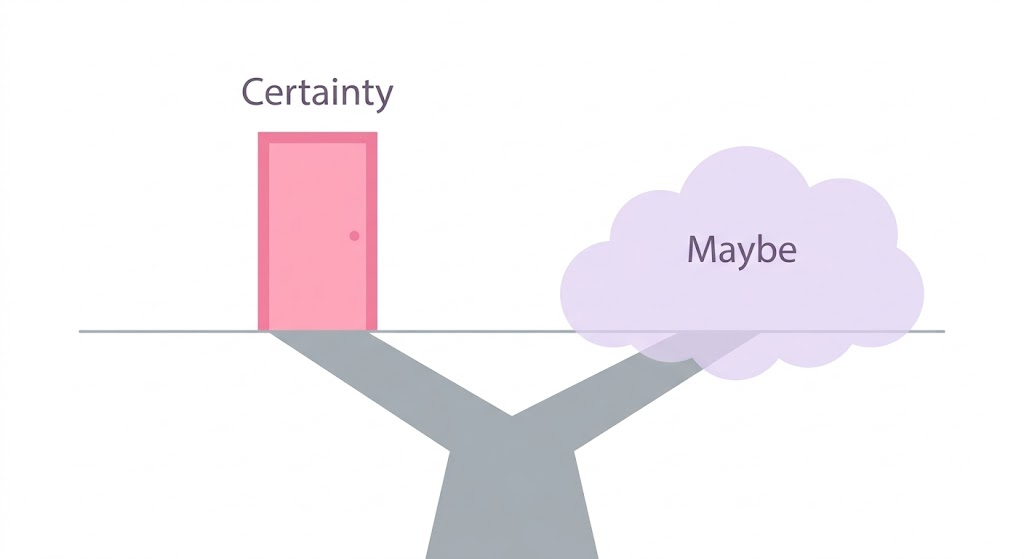
This state of "almost-but-not-quite" isn't just frustrating; it’s a sophisticated form of emotional labor where one partner carries the burden of uncertainty while the other reaps the rewards of companionship. It is intimacy without accountability—a hollow structure that often leads to significant psychological burnout.
Key Insight
A situationship is a strategic negotiation where the person with the "least interest" controls the dynamics of the relationship.
The Illusion of Low Stakes
From a psychological perspective, situationships thrive because they exploit our fear of rejection and our innate desire for connection. Often, these dynamics are fueled by mismatched Attachment Styles:
- The Avoidant Initiator: Often values autonomy over connection. They enjoy the arrangement because it offers all the benefits of a partnership—intimacy, companionship, and emotional support—without the "suffocating" weight of long-term accountability.
- The Anxious Accepter: Often agrees to these terms because of a scarcity mindset—the belief that "some of them is better than none of them." They fall into the trap of "potentiality," hoping that more love and more patience will act as a catalyst for the other person's commitment.
This is a cognitive distortion. You cannot love someone into being ready for you.

The Cost of Chronic Uncertainty
While a situationship claims to be "low pressure," it actually generates a massive amount of chronic psychological stress. Because there are no defined rules, your brain is in a constant state of hyper-vigilance, scanning for signs of abandonment or interest.
This results in "The Silencing Effect": You cannot express perfectly normal relationship frustrations—like being annoyed that they didn't text you all weekend—because you technically "aren't together." You suppress your needs to keep the peace, slowly eroding your self-esteem and self-trust. Over time, the lack of a secure base prevents you from focusing on other areas of your life, such as career or personal growth.
How to Exit the 'Almost' Zone
You escape a situationship by recognizing that a lack of clarity is clarity. "I don't know what I want" is usually a polite translation for "I know I do not want to commit to you, but I don't want you to leave yet."
To break free, you must institute a strict boundary. Use a script that honors your needs:
"I've really valued our time together, but I am looking for a committed relationship and a shared future. Since we are looking for different things right now, I need to step away so I can find what I'm looking for."
It is terrifying to walk away from a connection you care about, but it is the only way to clear the energetic space in your life for a partner who is actually thrilled to call you theirs. Real love requires the bravery to be "all in."
Tired of the Toxic Cycle?
Put this psychology into practice. Match with verified, intentional users on our secure Telegram platform and escape the swipe fatigue.