Bridging the Gap: The Psychology of Translating Digital Chemistry into Real-Life Connection
By Maya Chen
Behavioral Psychology & Relationship Expert
Transitioning from text to an in-person date is the highest friction point in modern romance. Learn how to manage expectations, regulate your nervous system, and architect a first date designed for authentic connection.
In the high-velocity ecosystem of 2026 dating, the transition from a digital interface to a physical encounter is where most potential connections evaporate. We call it the "Digital Intimacy Gap"—the jarring space between who we imagine someone to be and who they actually are.
You’ve spent seventy-two hours in a dopamine-fueled texting marathon. You know their favorite obscure synth-pop band and their stance on sourdough. Yet, the moment you sit across from them at a bistro, the air turns leaden. This isn't necessarily a lack of chemistry; it's a physiological and psychological mismatch that occurs when our biological hardware meets our digital software.

The Anticipation Trap: Deconstructing the "Halo Effect"
When we communicate via text, our brains are forced to perform massive amounts of "gap-filling." Without the 90% of communication that happens via body language, micro-expressions, and pheromones, we subconsciously build an idealized avatar. This is known as the Halo Effect—a cognitive bias where we attribute a suite of positive personality traits to someone based on a single data point (like a witty bio).
Key Insight: The Dissonance Threshold
The longer you wait to meet in person, the more "fictional debt" you accrue. To minimize the "spark-kill," aim to meet within 5 to 7 days of the initial match. This prevents your brain from cementing an unreachable fantasy.
Biological Anchoring: Regulating Your Nervous System
That pre-date nausea isn't "fate"—it's your sympathetic nervous system signaling a perceived threat. You are entering a social evaluation phase where rejection is a possibility. When you arrive "jacked up" on cortisol, your date’s mirror neurons detect your dysregulation, causing them to feel subconsciously uneasy.
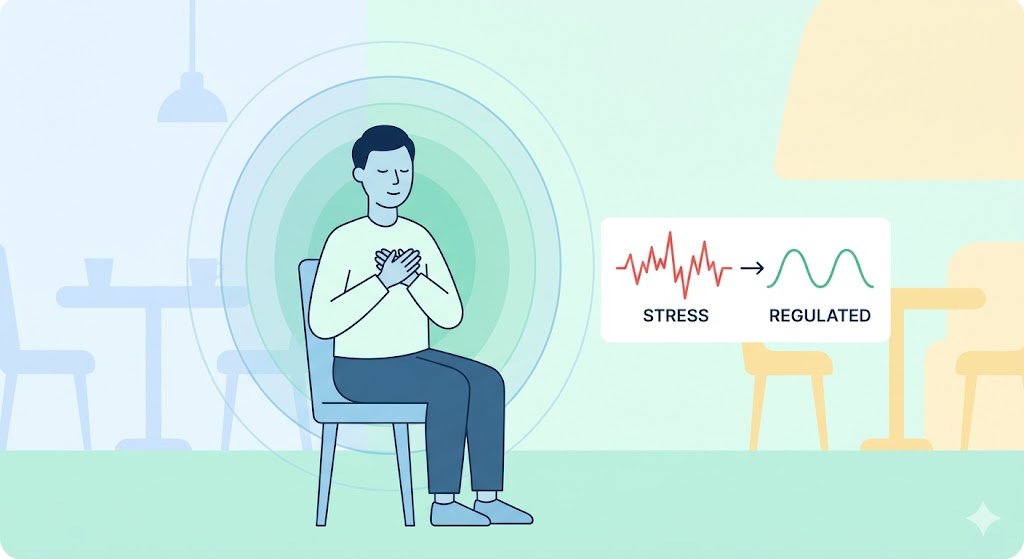
To counter this, utilize Somatic Grounding. Before exiting your car, try the "2-1-4" breathing technique: Inhale for two seconds, hold for one, and exhale for four. This extended exhale stimulates the vagus nerve, signaling the brain that you are in a safe environment. A grounded presence is the most underrated aphrodisiac in modern dating.
Architecting Connection: The Power of "Side-by-Side"
The traditional "interrogation style" dinner date is a psychological minefield. Sustained, direct eye contact with a stranger triggers a primal "fight or flight" response in many people. It feels high-stakes because there is nowhere else to look.
Instead, leverage Parallel Play. Activities like walking through a gallery, visiting a botanical garden, or sitting at a bar corner allow for "side-by-side" psychology. This arrangement encourages collaborative observation. When the conversation dips, you both look at the environment, not at your phones or each other's forced smiles.
Conversational Alchemy: Hunting for Emotional Data
Most first dates fail because they mirror a job interview. "Where are you from?" and "What do you do?" are factual inquiries that yield low emotional ROI. To build a "spark," you must pivot to Emotional Data.
"How long have you been an architect?"
"What was the moment you realized you wanted to build things for a living?"
Use the F.O.R.D. Method (Family, Occupation, Recreation, Dreams) not as a checklist, but as a springboard into why they value those things. Connection isn't found in shared history; it's found in shared values.

The Post-Date Audit: Reclaiming Your Agency
The most common mistake people make post-date is spiraling into the "Did they like me?" trap. This externalizes your worth. To maintain high-value dating hygiene, shift the internal dialogue to your own somatic experience. Ask yourself: "Did I feel like a more energized version of myself around them, or did I feel the need to perform?" Chemistry is often just the absence of the need to mask.
Tired of the Toxic Cycle?
Put this psychology into practice. Match with verified, intentional users on our secure Telegram platform and escape the swipe fatigue.