Retroactive Jealousy: Why You Are Obsessed With His Past Relationships
By Ari Voss
Behavioral Psychology & Relationship Expert
Social media has made it dangerously easy to stalk a partner's ex. Understand the clinical framework of Retroactive Jealousy and how to stop his past from destroying your present.
Retroactive Jealousy (RJ) is more than just a passing pang of envy over a partner’s ex; it is a complex psychological state characterized by intrusive thoughts, "mental movies," and an agonizing urge to investigate a partner's romantic or sexual history. While it feels like a relationship issue, clinical psychologists increasingly categorize severe RJ within the OCD spectrum, specifically as a subset of Relationship Obsessive-Compulsive Disorder (ROCD).
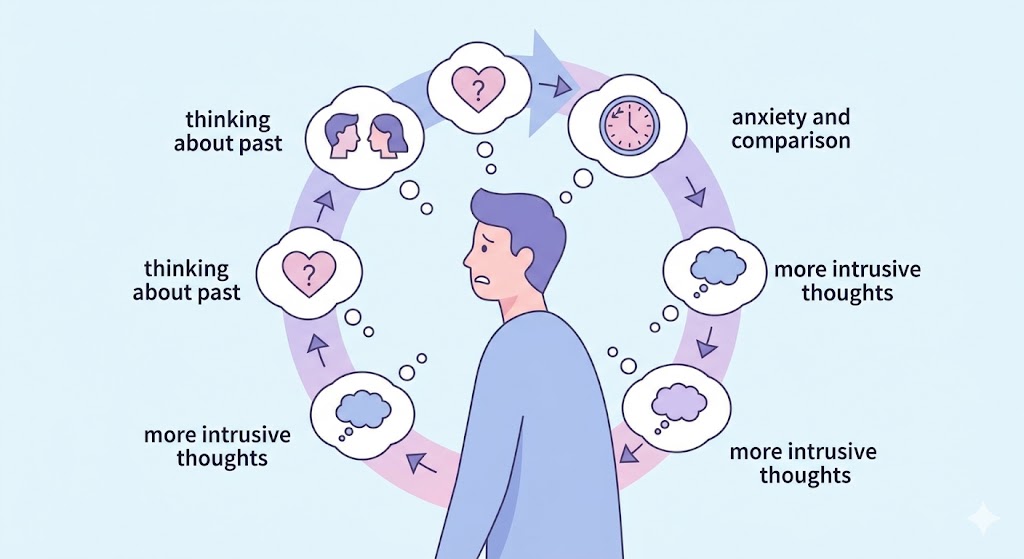
The OCD Spectrum of Jealousy
In its clinical form, RJ operates through the classic cycle of Obsessions and Compulsions. The "obsession" is the intrusive thought—a sudden, vivid image of your partner with an ex. This triggers an spike in cortisol and a sense of impending doom.
The "compulsion" is any behavior used to neutralize that anxiety. Common compulsions include:
- Digital Archaeology: Spending hours scrolling through an ex's social media.
- The Interrogative Trap: Asking your partner for specific, granular details about past intimacy.
- Comparison Testing: Seeking constant verbal reassurance that you are "better," more attractive, or more loved than the previous partner.
Compulsions provide temporary relief but reinforce the brain's belief that the "threat" (the past) is real. By seeking reassurance, you are effectively watering the weeds of your own anxiety.
The Danger of the Digital Panopticon
In previous generations, a partner's past was a closed book, reachable only through rare physical mementos. Today, we live in a digital panopticon where the past is perpetually present. Social media creates a survivorship bias in our perception of other people's relationships. We see the curated highlights—the vacation photos, the anniversary posts—and our brains mistake these for the totality of their experience.
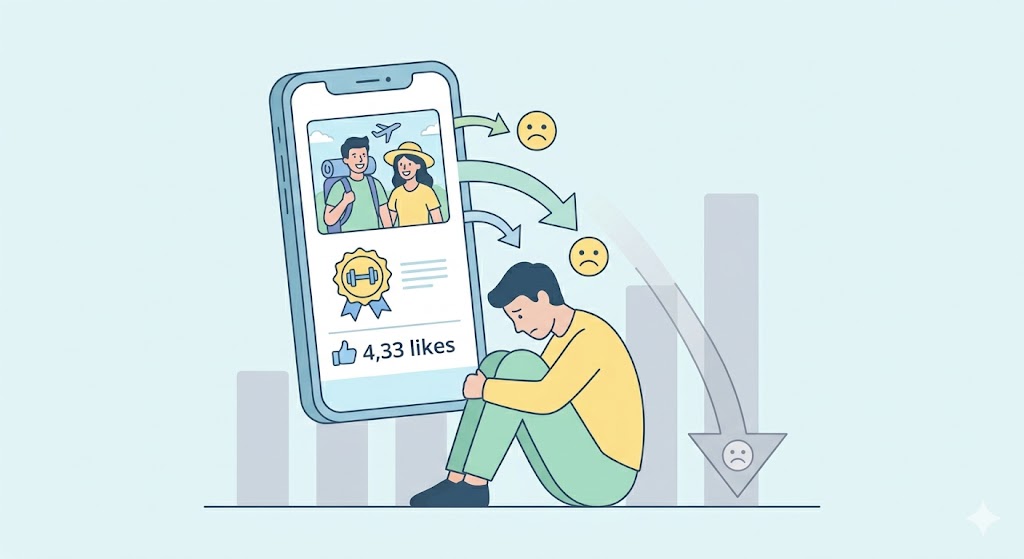
When you view an old photo of your partner with someone else, your brain lacks the context of the arguments, the boredom, and the reasons it ultimately failed. You are comparing your behind-the-scenes footage to their highlight reel.
Addressing the Root: Attachment and Worth
Retroactive Jealousy is rarely about the "ex." It is a symptom of internal fractures, often tied to:
Anxious Attachment
A deep-seated fear that love is finite or that you are easily replaceable.
Moral Perfectionism
A belief that a partner's past "mistakes" or "liberties" somehow stain the current relationship.
Breaking the Compulsion Cycle
To overcome RJ, you must adopt a strategy of Exposure and Response Prevention (ERP). This means allowing the intrusive thought to exist without performing the compulsion to fix it.

Actionable Steps:
- Digital Sobriety: Implement a "no-search" rule. Block the exes not out of hate, but to protect your own neural pathways from the addiction of comparison.
- Boundary Communication: Use a script: "I am working through some retroactive anxiety. To help me heal, I need us to pause discussing past details for a while so I can focus on 'us' in the present."
- Sit with the Discomfort: When an intrusive thought strikes, label it. "This is a jealous thought." Don't fight it, don't analyze it. Let it pass through you like a cloud.
The past is a graveyard of things that didn't work. Your partner isn't with you despite their past; they are with you because of it. Every previous heartbreak was a lesson that led them to the person they are today—the person who chose you.
Tired of the Toxic Cycle?
Put this psychology into practice. Match with verified, intentional users on our secure Telegram platform and escape the swipe fatigue.