The 'Nice Guy' Illusion: Unmasking Covert Contracts in Dating
By Maya Chen
Behavioral Psychology & Relationship Expert
Why do self-proclaimed 'Nice Guys' often turn hostile when rejected? Uncover the psychology of transactional dating and how to differentiate a 'Nice Guy' from a 'Good Man'.
He tells you repeatedly that he isn't like "other guys." He positions himself as the antidote to the "toxic" men you've dated in the past. Yet, there is a vibrating, unspoken tension beneath his generosity that sets off an internal alarm. When you eventually clarify that you only see him as a friend, the mask slips. The "Nice Guy" explodes in a fit of entitlement, branding you a "user" and claiming women "only want jerks."
What looks like kindness from the outside is often a complex psychological defense mechanism. This isn't just a personality quirk; it's a specific interpersonal dynamic characterized by dishonesty, manipulation, and a profound lack of emotional maturity.
The Architecture of the Covert Contract
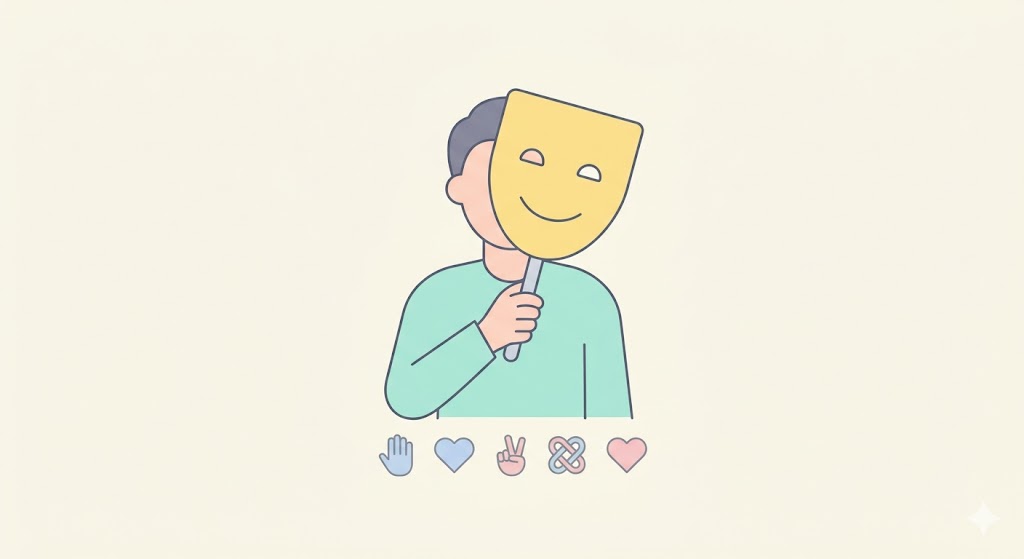
Dr. Robert Glover, a pioneer in male psychology and author of No More Mr. Nice Guy, explains that this archetype operates on a deeply manipulative mechanism called a "Covert Contract." Because the Nice Guy believes that his true self is unlovable, he creates a persona designed to trade "goodness" for affection.
Key Insight: The Secret Clause
"If I am perfectly agreeable, hide my flaws, and do endless favors for you, you are obligated to reward me with love, sex, and validation. If you don't, you have broken a contract you never signed."
The danger lies in the silence of the agreement. The Nice Guy acts as an emotional ATM, believing that if he deposits enough "nice tokens," a romantic relationship will eventually dispense. This isn't altruism; it's a high-interest loan. When the transaction fails to yield the desired intimacy, his hidden entitlement surfaces as rage, passive-aggression, and victimhood.
The Lack of Boundaries and Authenticity
Nice Guys are fundamentally dishonest. Because they are terrified of conflict and rejection, they suppress their true opinions to mirror yours. They will not set boundaries, and they will agree to tasks they genuinely despise just to win approval.

While this seems harmless or even "sweet" initially, it is the ultimate foundation of distrust. You cannot build a genuine connection with someone who is constantly shape-shifting to appease you. A man without boundaries is a man without a core. Without that core, there is no safety, because you never know who you are actually talking to—or when his suppressed resentment will boil over.
Nice Guys vs. Good Men
Differentiating between a "Nice Guy" and a "Good Man" is essential for emotional safety. One seeks to control the narrative of how he is perceived; the other seeks to live according to his values.
| Attribute | The "Nice Guy" | The "Good Man" |
|---|---|---|
| Conflict | Avoids it at all costs; agrees to manipulate. | Values truth over harmony; willing to disagree. |
| Favors | Transactional; expects romantic payback. | Generous; acts out of character with no strings. |
| Rejection | Viewed as an injustice or personal attack. | Accepted with grace; respects your autonomy. |
| Communication | Passive-aggressive or "mind-reading." | Direct, honest, and emotionally transparent. |
Tired of the Toxic Cycle?
Put this psychology into practice. Match with verified, intentional users on our secure Telegram platform and escape the swipe fatigue.